The most common worry I hear from patients flying in from the UK is not about the surgery itself. It is about what happens after they fly home. “Once I’m back in London, will anyone still be looking at my nose?” It is a fair question. And it is the right question — because the surgery is genuinely only the first half of what produces a good rhinoplasty result.
There is a perception in the UK that having rhinoplasty in Turkey means losing access to your surgeon the moment you leave the country. For some clinics, that perception is unfortunately accurate. For others, including mine, it is not. The structured follow-up that runs after surgery is, in my view, just as important as the operation itself — and patients deserve to know exactly what that looks like before they commit to anything.
This article walks through what 18 months of post-rhinoplasty follow-up actually involves in my practice, why it matters for the long-term result, and the practical questions you should ask any clinic before having surgery abroad.
Why Rhinoplasty Aftercare Is Not Optional
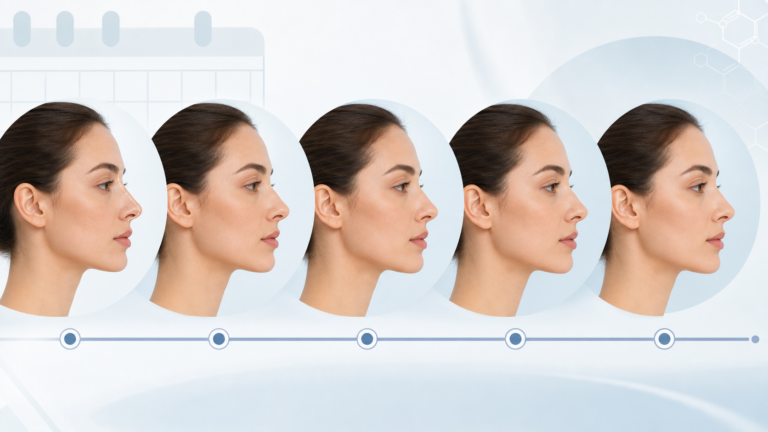
A rhinoplasty result does not finalise itself on the day of surgery. It evolves over the next 12 to 18 months. Swelling resolves unevenly. The skin envelope settles down over the new bony and cartilaginous framework underneath it. Soft tissues remodel. In some patients with thicker skin, the tip continues to refine for nearly two years.
During this healing period, small surgeon-led adjustments make a meaningful difference to how the final result looks. A specific taping pattern at month two can flatten residual swelling in the tip. A particular massage technique can help thick skin contract more evenly. A change in the cream or ointment a patient is using can reduce redness at a critical phase. These are not aesthetic luxuries — they are part of the work that goes into a result that looks good not just at month three, but at month twelve, and again at year five.
I would say this is the single most under-discussed part of rhinoplasty. The surgical skill of the operation is what most clinics market on. The aftercare is what determines whether that surgical skill actually produces the result it was capable of producing.
What Structured Follow-Up Looks Like in Practice
In my practice, the patient-care model is the same whether you live ten minutes from the clinic in Antalya or four hours away by plane in Manchester.
The first month — weekly photos and videos
Every patient sends weekly photographs and short videos of their nose during the first month after surgery. The images are reviewed personally — not by an algorithm or a generic checklist. Based on what we see, specific recommendations follow: a taping change, a different sleeping position, a topical to introduce, an activity to ease off. This is also the period where small concerns get caught before they become bigger ones.
Beyond the first month — a structured longer-term schedule
After the first month, follow-up moves to a longer rhythm appropriate to your healing pattern. Some patients need more frequent check-ins than others — thick-skinned patients, for instance, generally need a longer period of active management than thin-skinned patients. The schedule is adjusted based on what your specific recovery is showing us. Total active follow-up runs for approximately 18 months.
Direct, surgeon-led clinical decisions
Day-to-day communication is handled by our patient-care team, who respond quickly across time zones. But every clinical recommendation — every taping change, every massage instruction, every “should I be worried about this” question — is reviewed personally by me. There is no version of this process where you are talking to someone who has not seen your nose.
Patient compliance is part of the operation
I am direct with patients about this from the consultation: the follow-up only works if you participate. Sending the weekly photos, following the recommendations, doing the taping when it is recommended — these are not optional steps. They are part of the operation, just performed over months rather than hours. Patients who engage with this process get the best long-term results. Patients who disengage after the splint comes off generally do not.
What We Adjust Based on What We See
Not every patient needs the same things during recovery. The point of weekly photographs is that we can recommend what your nose needs, not what a generic post-operative protocol assumes. The kinds of adjustments that come up most often:
Taping patterns. Different tape configurations control different patterns of swelling. A patient whose tip is holding swelling longer than expected might get a different tape recommendation than one whose dorsum is the slower area.
Massage techniques. Specific massage protocols help certain swelling patterns and skin types. We demonstrate them by video when needed and check the technique on subsequent updates.
Topicals — creams, ointments, vitamins. Some patients benefit from particular products at particular phases. Others do not need anything beyond basic care. The recommendation depends on what the photographs show.
Activity restrictions. Most patients are eager to return to exercise, makeup, or wearing glasses. The right timing for each activity depends on how your specific recovery is progressing — not on a fixed calendar.
Reassurance versus concern. Many patient worries during recovery are about completely normal stages of healing. Distinguishing between “this is expected” and “this needs attention” is part of the value of close follow-up.
Why “Aftercare” Means Different Things at Different Clinics
The word “aftercare” has become marketing language, and that makes it hard for patients to evaluate. Some clinics list “12 months of aftercare” on their website and mean a generic email checklist. Others mean a coordinator who responds to messages but not a surgeon who actually reviews your photographs. Both can be technically described as aftercare.
When you are evaluating clinics, the questions that get past the marketing and into the actual experience are practical ones:
Who actually reviews my progress photographs — the surgeon or a coordinator?
How quickly do messages get a response, and from whom?
Are there scheduled video consultations during the follow-up period, or only patient-initiated messages?
What happens if I have a complication or a question at month nine — am I still in active contact with my surgeon?
Can you show me the typical follow-up schedule a previous international patient experienced?
The answers tell you what your actual experience will be, regardless of what the marketing brochure says.
The Practical Reality for UK Patients
Most international patients spend 7 to 10 days in Antalya for the surgery and the immediate post-operative period. The splint comes off before you fly home, the early healing is stable, and you return to your normal life with a healing nose.
What changes after you leave Antalya is the format of your follow-up — not the frequency. Weekly photographs travel through WhatsApp and email faster than a patient could realistically travel to a UK clinic for a follow-up appointment, anyway. The substantive question is whether someone qualified is actually looking at those photographs and responding. In a well-organised practice, the answer is yes — and the practical experience of a UK patient nine months out from surgery is often better than the experience of a patient living locally who only sees their surgeon at scheduled in-person appointments.
The combination that makes this work, in my experience, is three things together: a responsive patient-care team that handles day-to-day logistics, a surgeon who actually reviews the clinical material, and patient compliance with sending the photographs in the first place. Take any one of those three out and the system stops working.
The Long View on Aftercare
Rhinoplasty is one of the most consequential aesthetic decisions a person makes. The result will be with you, in every photograph, in every conversation, for decades. The amount of attention given to the months after surgery should match the importance of the decision itself.
I do not believe a rhinoplasty is finished when the patient walks out of the operating theatre. It is finished about 18 months later, after the swelling has resolved, the skin has settled, the small adjustments have been made along the way, and the result has stabilised into what the patient will live with long-term. The work in those 18 months is the difference between a result that looks acceptable at month three and a result that looks good at year ten.
If you are considering rhinoplasty in Turkey and the aftercare conversation is not part of your initial consultation, that itself is information. It should be one of the first things you talk about, not one of the last.
Frequently Asked Questions
How long does follow-up actually last after rhinoplasty in Turkey?
In my practice, structured follow-up runs for approximately 18 months. The first month involves weekly photographs and videos; after that, the rhythm becomes less frequent but continues until the result has fully settled and patient and surgeon agree no further input is needed.
Will I be able to reach my surgeon directly if I have a concern from the UK?
Yes — in well-organised practices, clinical decisions remain with the surgeon throughout the follow-up period. Day-to-day messages are typically handled by the patient-care team for speed across time zones, but anything clinical is reviewed personally by the surgeon.
What if I notice something wrong with my nose at month six, when I am back in the UK?
Send photographs, describe what you are seeing, and the situation will be evaluated promptly. Most concerns at this stage are normal healing variations that need reassurance or a small adjustment. Genuine complications are rare and, if they occur, the plan for managing them is established directly with the surgeon.
Do I need to fly back to Turkey for follow-up appointments?
Generally no. The weekly photograph format is designed specifically so that international patients can be followed as closely as local patients without the cost and inconvenience of repeated travel. In rare cases where in-person review is needed, that is discussed individually.
What happens if I do not send the weekly photographs?
The follow-up system depends on patient compliance. Patients who engage with the photograph process get the benefit of the close monitoring. Patients who disengage lose that benefit and rely instead on standard healing without the small adjustments that can refine the long-term result.
Is aftercare really that important, or is it mostly marketing?
It is important and it is not optional. Rhinoplasty results evolve over 12 to 18 months. The taping, massage, topicals, and timing recommendations made during that window meaningfully affect the final result. Choosing a clinic without a real aftercare system is choosing to leave a substantial part of the surgery to chance.
Read Next
- Rhinoplasty in Antalya: What to Expect
- Does the Nose Tip Drop After Rhinoplasty? A Surgeon’s Honest Answer
- About Op. Dr. Aytaç Kılıç
Author Bio
This article was written by Op. Dr. Aytaç Kılıç, an ENT and facial aesthetic surgeon based in Antalya. Op. Dr. Aytaç Kılıç completed his medical training at Hacettepe University Faculty of Medicine and his specialty training in ENT — Head and Neck Surgery in Turkey. He gained hands-on surgical experience as a Visiting Student at Harvard Medical School’s Department of Otolaryngology, assisting in advanced facial and reconstructive procedures. His practice in Antalya focuses on primary and revision rhinoplasty, fox eye surgery, upper eyelid surgery, otoplasty, and bichectomy. International patients are a significant share of the practice.
Call to Action
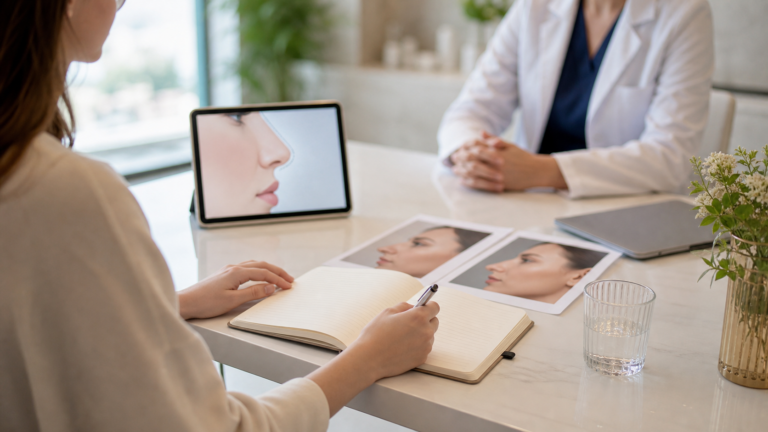
If you are considering rhinoplasty in Turkey and want to understand how the aftercare process would work for your specific case, the first consultation is conducted directly with Op. Dr. Aytaç Kılıç via video. The conversation covers not just the surgery itself but the months that follow.
Published May 13, 2026. Reviewed by Op. Dr. Aytaç Kılıç. This article is for educational purposes only and does not constitute medical advice. All surgical decisions are made through individual consultation. Results vary by patient.